From a canvas map to a production-ready festival plan.
The Hoshinogawa Hanabi canvas is consolidated into one planning source: audience strategy, campaign promise, detailed schedule, team assignments, content requirements, safety notes, and website handoff.
This page is a Minora example. Hoshinogawa Hanabi Festival is a fictional event, not a real public notice or real festival.
01 / Campaign objective
Make one fictional summer night feel calm, deliberate, and easy to join.
The adopted direction is not a noisy festival poster. The campaign presents a restrained riverside evening: clear arrival steps, a simple program, quiet food stalls, visible safety guidance, and a black-white-gray fireworks identity with one warm accent for calls to action.
Convert the canvas decisions into a public website that can be understood in under one minute.
Reduce uncertainty around time, transport, exits, restrooms, and weather policy.
Create one visual world that can become the hero image, poster crop, social card, and venue signage.
Keep the example truthful: it must read as a complete sample, but never as a real event notice.
02 / Audience
Each audience needs a different reason to trust the page.
The site will not simply describe a festival. It will answer the questions each visitor type has before deciding whether to attend.
SegmentNeedPage evidence
Families planning a single eveningSafety, restroom, crowd flow, food timingTimeline blocks, child-friendly viewing area, exit reminders
Rail travelers and date-night visitorsArrival confidence and last-train timingStation route, 12-minute walk, 21:02 and 21:18 departure reminders
Design-sensitive visitorsA visual world worth saving and sharingFull-bleed hero, poster-inspired type, monochrome art direction
03 / Message system
The website promise is fixed before production begins.
Adopted message: A quiet riverside night where fireworks, food stalls, and safe movement are already organized for you. Unused brainstorm ideas are not kept in the plan; every item below maps to a website section or operating task.
The event schedule becomes page content and staffing checkpoints.
15:30Core team arrival, signage check, generator and lighting confirmation
17:00Riverside gate opens; food-stall row and information desk begin
18:20Lantern walk begins from Kisaragi Street to viewing lawn
19:35Pre-show announcement: exits, restrooms, quiet viewing area
20:00Hoshinogawa fireworks sequence begins over the fictional river
20:45Staggered exit guidance and last-train reminder
Website copy must show the public version of this schedule. Internal notes keep the setup checkpoints visible without exposing operational details as real instructions.
05 / Team and staffing
Named owners make the plan operational instead of decorative.
All names are fictional sample names. They make the document concrete enough to demonstrate how Minora can carry work assignments into a production page and operating checklist.
OwnerWorkOutput
Mizuki Sato / Campaign PlannerFinal message, page structure, approval gatePlanning document v1.4 and launch checklist
Haruto Kato / Transport LiaisonStation route, last-train reminder, exit sequenceAccess block and map labels
Yuna Mori and Kenji Ito / Vendors and AssetsFood-stall list, photography, poster cropsVendor notes, image set, social card
06 / Content package
Every asset has a known destination.
The page should not carry unused ideas. The following assets are the adopted set for the activity website and home-page example card.
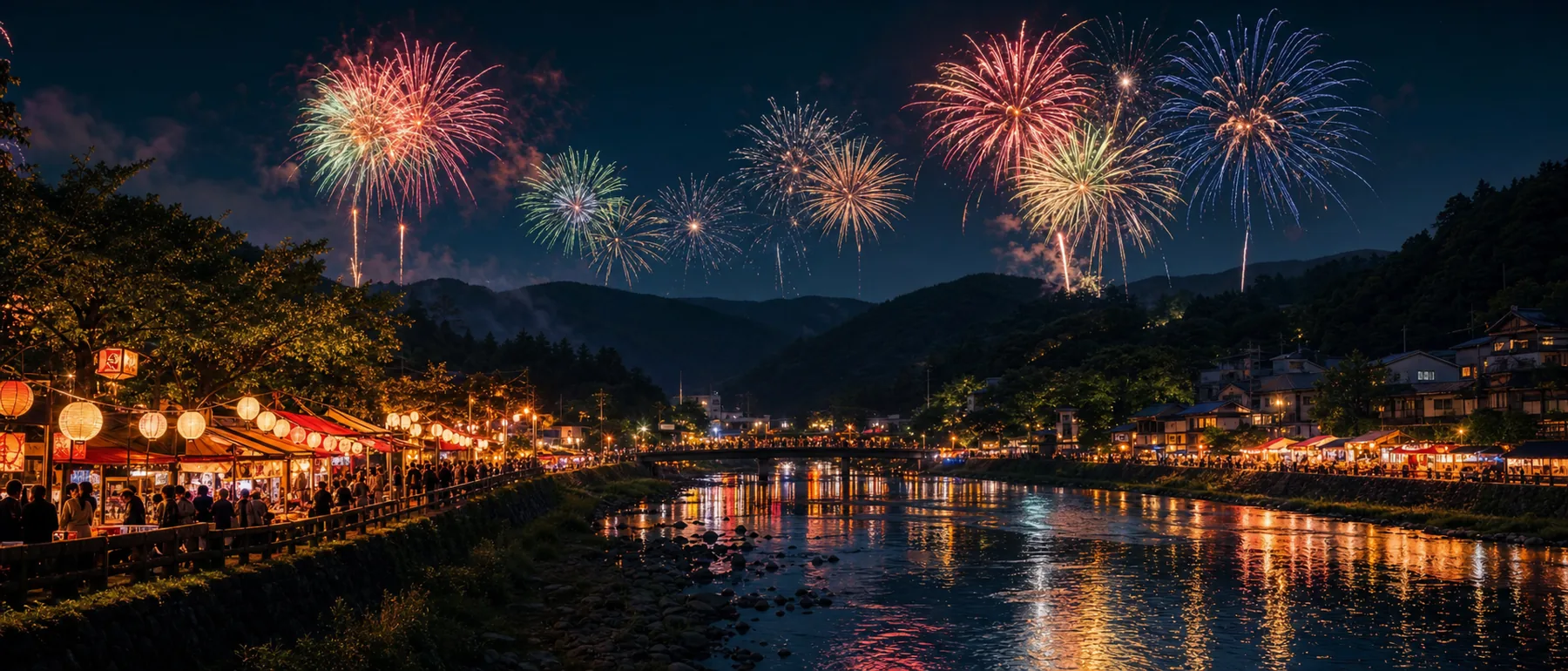
Hero image: monochrome fireworks over the fictional Hoshinogawa river.
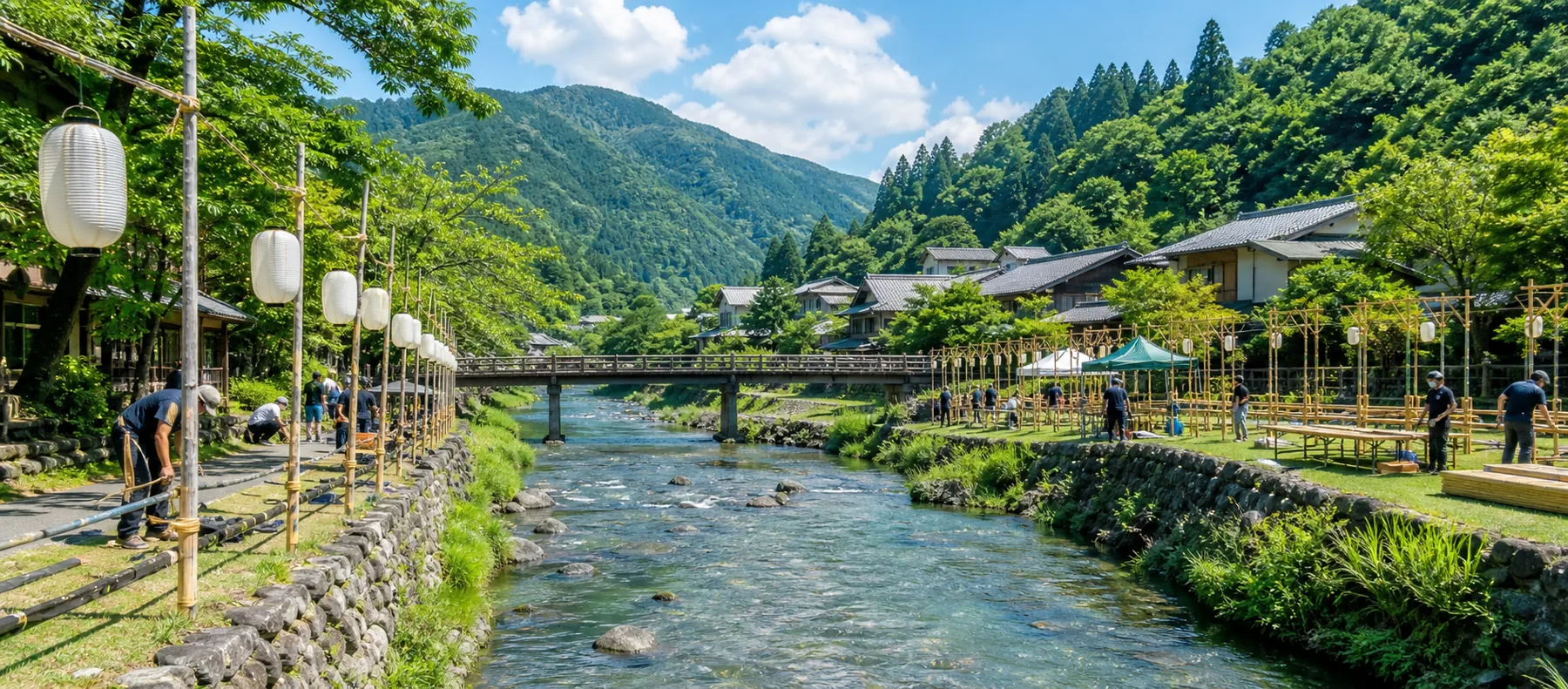
Story image: lantern street and visitors moving toward the riverside.
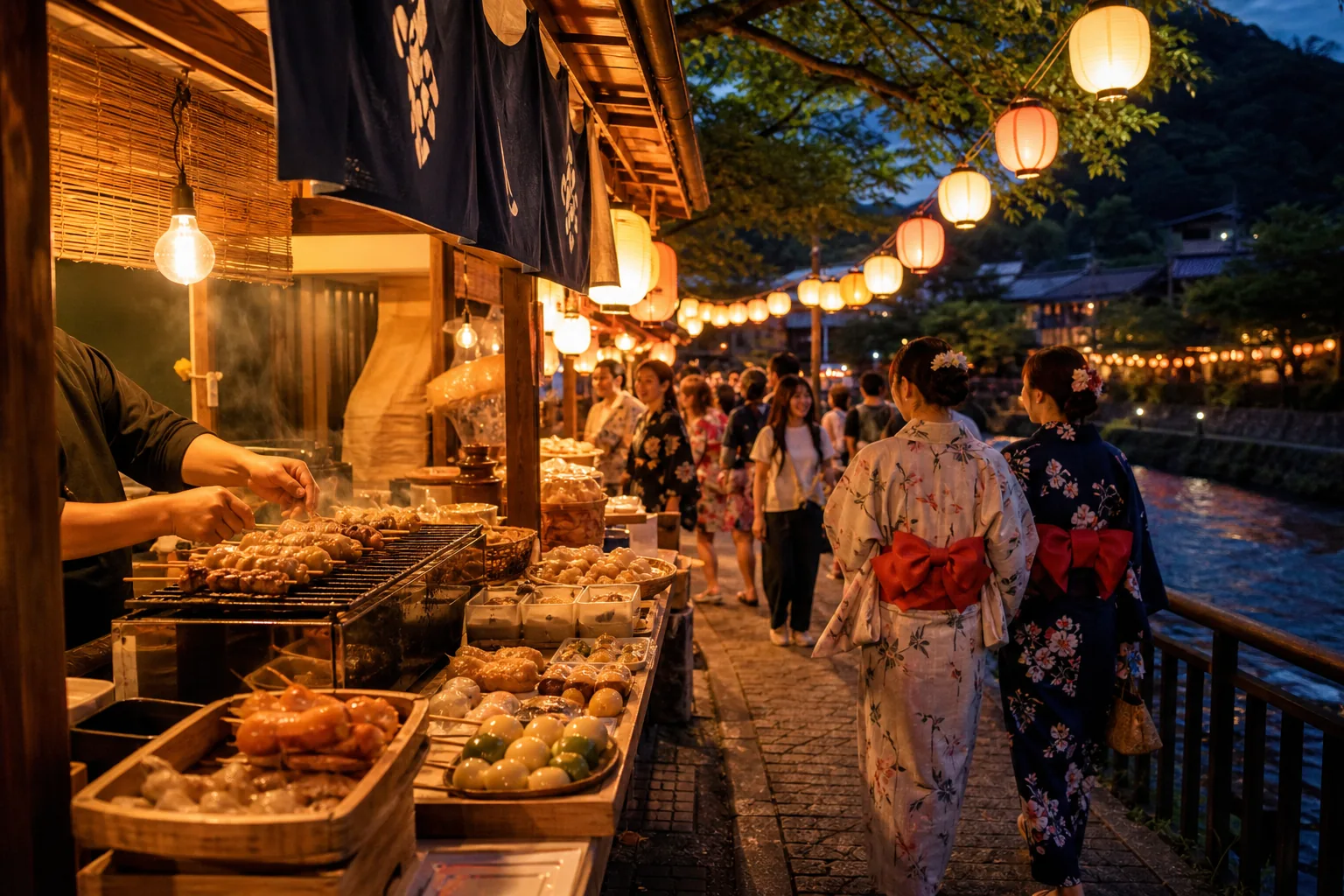
Food-stall image: warm yatai counter used only in the vendor section.
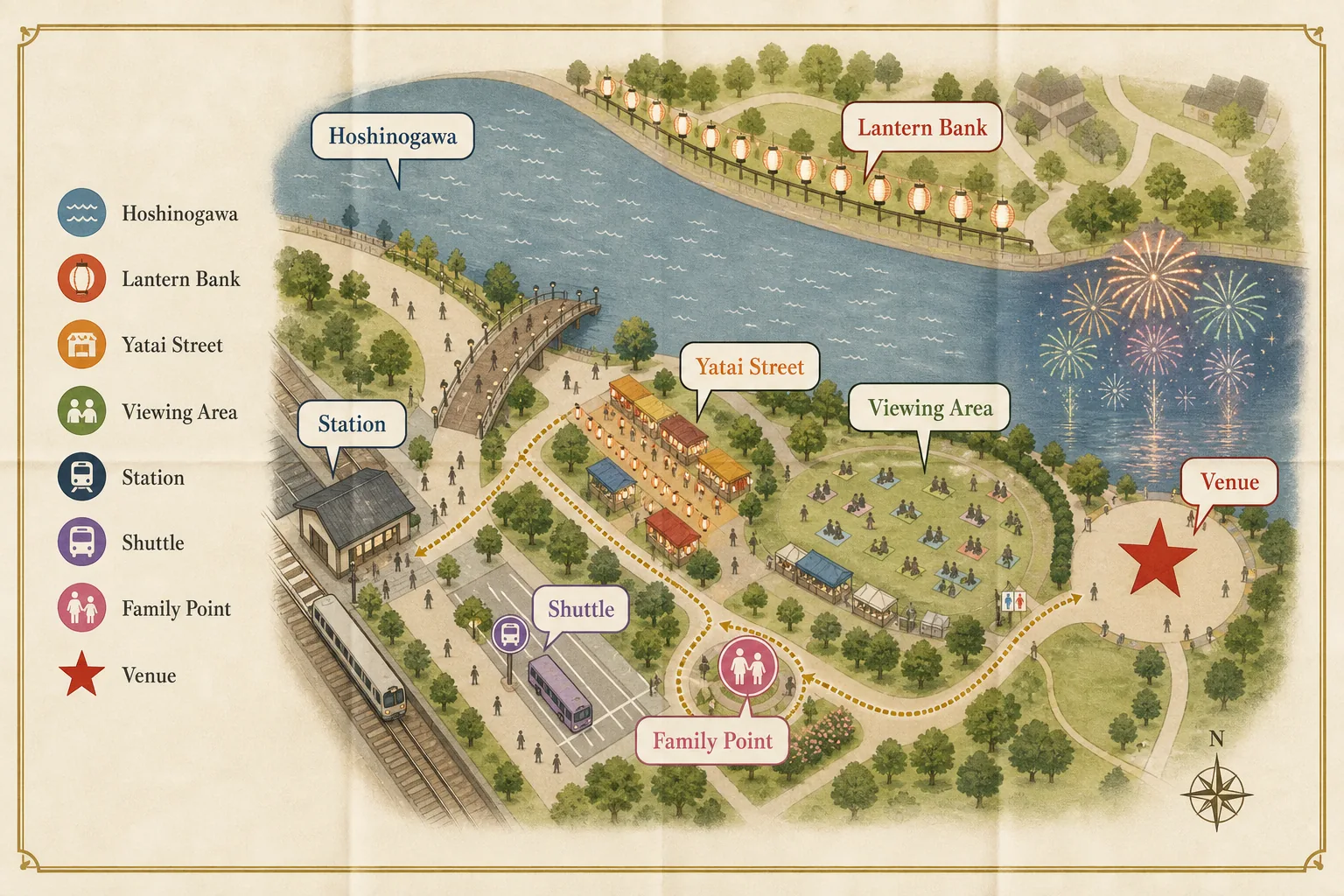
Map image: fictional static map with station, bridge, viewing lawn, exits, and first-aid desk.
Social preview: square crop with the festival crest, date, and sample disclaimer.
07 / Site assets
The document includes the same assets used by the event site.
These images are the current production candidates for the fictional event website. Keeping them inside the document makes the handoff inspectable: each asset has a target section, role, and replacement rule.
Hero backgroundUsed in the first viewport to establish the festival atmosphere, date, venue, and sample disclaimer.Story imageUsed in the story section to show the fictional riverside town before nightfall.Yatai sectionUsed where the site explains food, movement, and the practical visitor flow around the stalls.Access mapUsed in the access section as a fictional static map with route, exits, viewing lawn, and first-aid desk.
08 / Website handoff
The planning document translates directly into the event site.
The event website should default to Japanese for atmosphere, with Traditional Chinese and English available. Each locale keeps the same structure so the sample remains comparable.
Hero: title, date, venue, fictional-event notice, primary CTA to schedule.
Story: one fictional town paragraph and one image, not a tourism claim.
Schedule: public program with six confirmed moments.
Access: static fictional map, station route, exits, first-aid desk.
Footer: repeat sample disclaimer and route back to the Minora example flow.
09 / Operations
Operational constraints become explicit page rules.
The campaign must remain useful without pretending to be a real municipality, venue, or organizer. The website should feel complete, but its claims must stay inside the fictional sample.
Show the fictional-event disclaimer in the hero, access section, and footer.
Use only generated or owned images; do not copy real festival posters.
Avoid real station names, phone numbers, municipal labels, or emergency instructions.
Keep map labels fictional and visually clear.
Use one canonical date and one venue name across canvas, document, and site.
Before launch, check desktop, tablet, and mobile layout from hero through footer.
10 / Risks and fallback
The sample stays realistic by naming its constraints.
These are content and presentation risks for the example page, not real-event safety instructions.
If an image looks too close to a real place, replace it with a more clearly fictional generated image.
If copy reads like a real announcement, add the sample disclaimer earlier in the section.
If mobile layout hides the schedule or map, reduce decorative spacing before changing content.
If a locale is incomplete, keep the page unpublished until the same sections exist in all supported languages.
11 / Release checklist
Ready means the example can be inspected end to end.
Approval is based on what the reader can verify: the canvas leads to this document, this document leads to the website, and each page clearly states that the activity is fictional.